Self-Repairing Waterborne Coating Slows Corrosion More Than 600-Fold
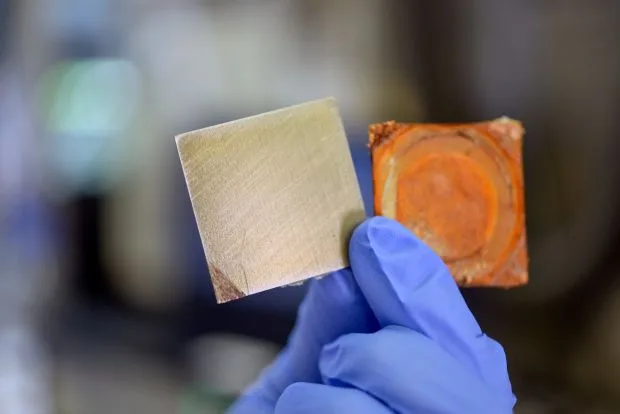
Researchers at the University of Queensland Australian Institute for Bioengineering and Nanotechnology announced Sept. 16 that they have developed a self-repairing waterborne polyurethane coating technology designed to respond when a coating is damaged and corrosion begins.
The technology uses nanoscale containers loaded with benzotriazole corrosion inhibitor. Changes in acidity associated with coating damage trigger release of the inhibitor. The researchers incorporated the particles into waterborne polyurethane coatings and report electrochemical testing showing corrosion rates as low as 37 nanometers per year. They characterize that as more than 600 times slower than rates reported for many existing high-performance corrosion-protection products.
A related part of the work uses metal-organic frameworks grown on nanocellulose. According to the university, that structure can hold three times more corrosion inhibitor and provided up to five times greater corrosion protection in testing. The research has been published in Small Science, and the team says pilot-scale testing is planned with a goal of developing a commercial product within five years.
This is unusually strong coatings research because it combines waterborne polyurethane chemistry, triggered corrosion-inhibitor release, MOFs and nanocellulose with a clear pathway toward scale-up. The potential application set includes bridges, buildings, vehicles and other steel assets where extending recoating intervals has major lifecycle-cost implications.
Looking for a reprint of this article?
From high-res PDFs to custom plaques, order your copy today!