
Toyota Paint Shop Cuts Energy Costs by More Than 80%
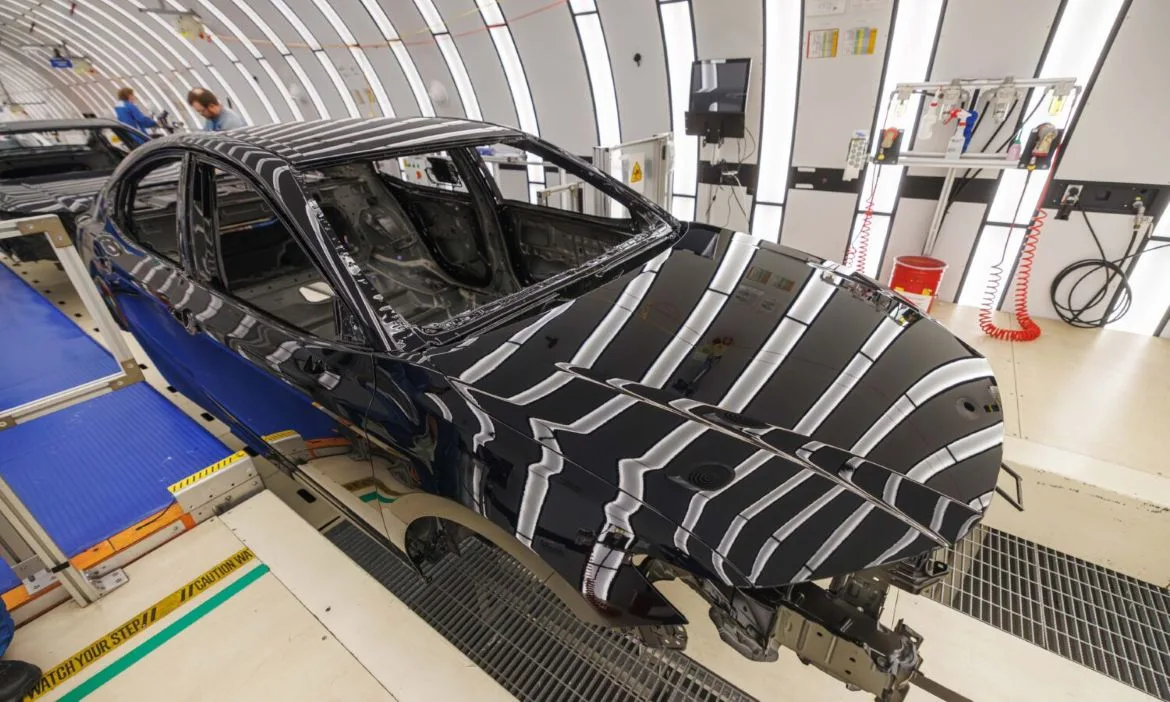
Toyota Motor North America's Kentucky manufacturing plant received a 2026 Better Project Award from the U.S. Department of Energy for an engineering project that substantially reduced energy consumption associated with paint booth ventilation.
The project focused on the Fresh Air Supply House (FASH) serving Line 1 at Toyota's Georgetown, Kentucky, manufacturing facility.
By redesigning the air supply process and incorporating preconditioned building air, Toyota's production engineering team reduced the amount of outside air entering the system by more than 55%.
The company reported annual energy cost reductions exceeding 80% for the affected paint booth air supply system.
Changing How Paint Booth Air Is Conditioned
Before the project, the Fresh Air Supply House relied entirely on outside air for processing.
That arrangement required the system to condition outside air before it could be used in the production environment.
Toyota engineers redesigned the system to incorporate air already inside the facility.
Using pre-tempered building air reduced the amount of additional heating and cooling required to maintain suitable production conditions.
The company said the approach helped reduce energy consumption while maintaining stable building temperatures.
Toyota's Kentucky plant processes nearly 250,000 vehicles annually.
"As part of our Environmental Challenge 2050, Toyota is committed to reducing the operational electric and natural gas usage," said Tim Hilgeman, general manager of Toyota environmental sustainability.
"This is a great example of how our production engineers innovate in North America, resulting in impactful projects, like the FASH in Georgetown."
Targeting Paint Shop Energy Consumption
Automotive paint shops can require substantial amounts of energy for ventilation, air conditioning and maintaining controlled production environments.
Toyota said the project formed part of a broader strategy to reduce energy consumption in its paint operations.
"The Toyota Environmental and Production Engineering team has designated paint shops as a major focus for energy reduction efforts," said Adam Suleiman, Toyota Kentucky production engineer and project lead.
"Working with the Environmental Engineering team, we were able to integrate both energy and cost savings into the redesign of the FASH."
The DOE Better Project Awards recognize industrial facilities that implement measurable improvements in energy, water and waste efficiency.
Toyota's project demonstrates how changes to supporting paint shop infrastructure can reduce operating costs without requiring a complete replacement of the painting process.
The company did not provide a breakdown of the capital investment or payback period.
Paint shop ventilation and air conditioning represent significant operating costs in automotive manufacturing. Toyota's project provides an example of reducing energy consumption through facility engineering. Explore more developments in industrial coatings and finishing operations.
Looking for a reprint of this article?
From high-res PDFs to custom plaques, order your copy today!