Nippon Paint Study Compares Coating-Line Environmental Impacts
Nippon Paint and University of Tokyo researchers developed a predictive life cycle assessment model for industrial coating processes.
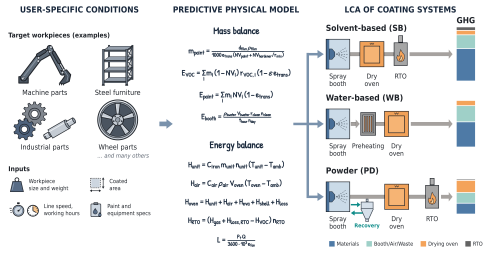
The model uses part dimensions, weight, surface area and factory conditions to estimate material consumption, VOC emissions, waste and energy use.
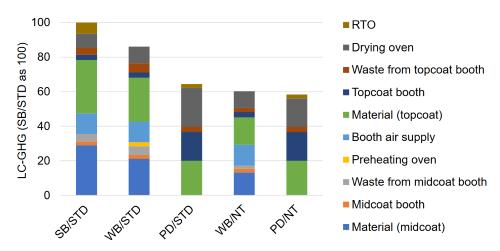
Under standard modeled conditions, greenhouse gas emissions were approximately 10% lower for waterborne coatings and more than 30% lower for powder coatings than for solventborne coatings.
Transfer efficiency and coated area strongly affected liquid-coating results. Curing temperature was particularly important for powder.
 Jotun
 Jotun
Improved transfer efficiency, changes to waterborne preheating and lower powder curing temperatures changed the comparison. Under some scenarios, waterborne and powder greenhouse gas emissions became comparable.
The results are scenario-specific, not universal savings claims. Nippon Paint announced the research November 17; the paper appeared in Cleaner Engineering and Technology in September.
Explore PCI’s finishing coverage for coating-line efficiency developments.
Looking for a reprint of this article?
From high-res PDFs to custom plaques, order your copy today!