Arkema, together with a consortium of companies, is exploring and advancing the recyclability of post-consumer PET (from bottles and other plastic items) to regain monomers for reuse as raw materials for more sustainable polyester powder resins for the coating market.
OH-functional acrylic emulsions can be designed with a wide range of hydroxyl values and performance characteristics to address the needs of many different applications in plastic, wood, automotive, and construction coatings.
Polly Mertz's new emulsion batch was delayed due to some of the ingredients freezing when left overnight on the dock. Polly, eager to start her batch scale-up, had approved placing the drums in a steam-heated room in the plant to allow for warming and easy pumping. What was the material that caused the problem, and what mistake had Polly made in heating up those frozen drums?
Perfectly safe and produced from an annually renewable feedstock, isosorbide has a unique combination of properties that offers excellent potential for a range of CASE applications.
A multi-step continuous process has been developed to convert renewably sourced furfural to 1,5-Pentanediol (1,5-PDO), which is a low-cost renewable replacement for 1,6-HDO, a diol intermediate currently used to produce coatings, adhesives and plastics.
Development of eco-friendly, sustainable and high-solid (low-VOC) coatings have received a lot of attention due to environmental concerns and legislative issues.
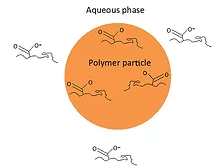
Although often not appreciated, it is important to recognize is that how you conduct your process has a profound impact on where the acid groups reside and therefore on your final product properties.
Whatever your reasons for varying the monomer feed rates, be aware that there may be unintended effects; in addition to the desired outcome, some product properties may also change.