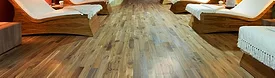
Designed for protection in clear wood finishes, the new product is a TEA-free, low-VOC, 50% solids, self-crosslinking waterborne polyurethane dispersion that delivers high abrasion, chemical, and black heel mark resistance.
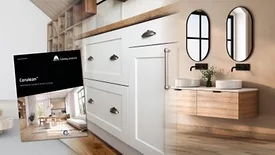
HGTV Home® by Sherwin-Williams introduced new cabinet and furniture paint, a new acrylic urethane enamel that provides a factory-like finish on cabinets and furniture, can be tinted to any color, and is offered in satin and semi-gloss sheens.
When comparing the performance of polymer emulsions made with substituted styrene versus conventional styrene in direct-to-metal, wood coatings, concrete sealer, and FR/intumescent coating applications, the results demonstrate improved performance properties when the substitute is utilized.
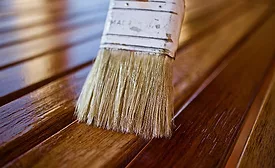
Both the sealer and the semi-transparent stain are formulated for all environments, even those in the harshest areas near open water. They are formulated to penetrate below the surface and create a flexible, breathable barrier that expands and contracts with environmental elements to protect against water damage.
The new range provides a complete spectrum of sheens, from high gloss to dead flat, and draws inspiration from the rich heritage and craftsmanship of trusted, Italian-inspired formulations.
Waterborne coatings have well-known benefits including a far-lower VOC-emissions profile, and lower inherent flammability, which make them generally safer to store and handle. There are still some common misperceptions around waterborne coatings, slowing their use. This article debunks a few of the most common myths.
A coating with low gloss and high transparency is the basis for a matte finish, without affecting the color strength and thus, leading to a very natural wood look even with dark tones. The work presented here outlines the development and application data of an inherently matte, waterborne acrylic polymer.
A new wetting agent enhances wetting behavior, particularly in wood coatings. The innovative approach is based on a comparative evaluation of silicone-free and silicone-based surfactants, focusing on surface tension and contact angle.