On June 19, the Office of the U.S. Trade Representative (USTR) Subcommittee on the Generalized System of Preferences (GSP) held a public hearing on its review of the eligibility of several countries, including India, Indonesia and Thailand, for benefits under the GSP program.
The Canadian Paint and Coatings Association (CPCA) held its 105th Annual Conference and Annual General Meeting (AGM) in Toronto on May 23-24, where eight new members were elected to the CPCA Board of Directors.
NACE International has formed the NACE Corrosion Consortia, a new service facilitating corrosion-mitigation research for companies, government bodies, research organizations, universities and other associations seeking to solve corrosion issues.
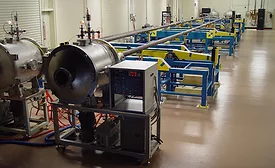
Materials scientists at Southwest Research Institute (SwRI) have developed a superhydrophobic coating and a process for applying it to the internal surfaces of long tubular structures.
The home improvement retailer Lowe's announced that it would phase out the use of two chemicals known as methylene chloride and N-methylpyrrolidone (NMP) in its paint removal products sold globally by the end of this year.
The University of Alicante Research Group in Vision and Color has developed a novel procedure for obtaining natural hybrid nanopigments able to optimize the optical, thermal and mechanical properties of the composite materials they are applied to.
With a focus on high-tech manufacturing, efficiency, energy savings and sustainability, the RadTech 2018 Conference and Exhibition recognized several contributions to the development of emerging and novel ultraviolet and electron beam technologies.

 RSS
RSS