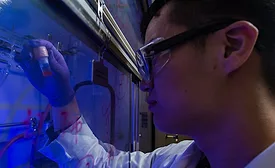
Rice University scientists plan to employ the power of the sun to build functional synthetic polymers using photosensitive quantum dots — microscopic semiconducting particles — as a catalyst.
RadLaunch, the idea accelerator for ultraviolet and electron beam (UV+EB) technology, announced the candidates for 2018. If selected as a RadLaunch participant, each company will receive financial support, a travel grant to attend RadTech 2018, and technical, marketing and funding mentorship opportunities.
The British Coatings Federation (BCF) released an announcement welcoming Prime Minister Theresa May's Mansion House speech, "Road to Brexit," in which she outlined plans to seek associate membership of the European Chemicals Agency (ECHA).
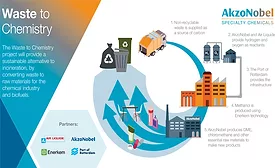
A consortium of companies comprising Air Liquide, AkzoNobel Specialty Chemicals, Enerkem and the Port of Rotterdam has signed a project development agreement covering initial investments in an advanced waste-to-chemistry facility in Rotterdam, the Netherlands.
Molly Hladik, Technical Project Leader with Michelman, was honored with the RadTech President's Award, at the group's annual meeting in Miami in February 2018.
The British Coatings Federation (BCF) and the British Adhesives and Sealants Association (BASA) have teamed up to shed light on how Brexit is expected to impact the industries they represent.
Organizers of UTECH North America 2018, the independent polyurethanes conference and trade show, announced an awards program to recognize star performers and trendsetters in the polyurethanes industry.
As part of its ongoing research into the safety of chemicals used in industrial, commercial and consumer applications, UL, an independent research and testing organization, has recently completed a study in which a variety of solvent-based and water-based floor coating products were tested for airborne emissions in simulated indoor environments.
 RSS
RSS