Low-Temperature Automotive Coating Targets Integrated Body-and-Bumper Process
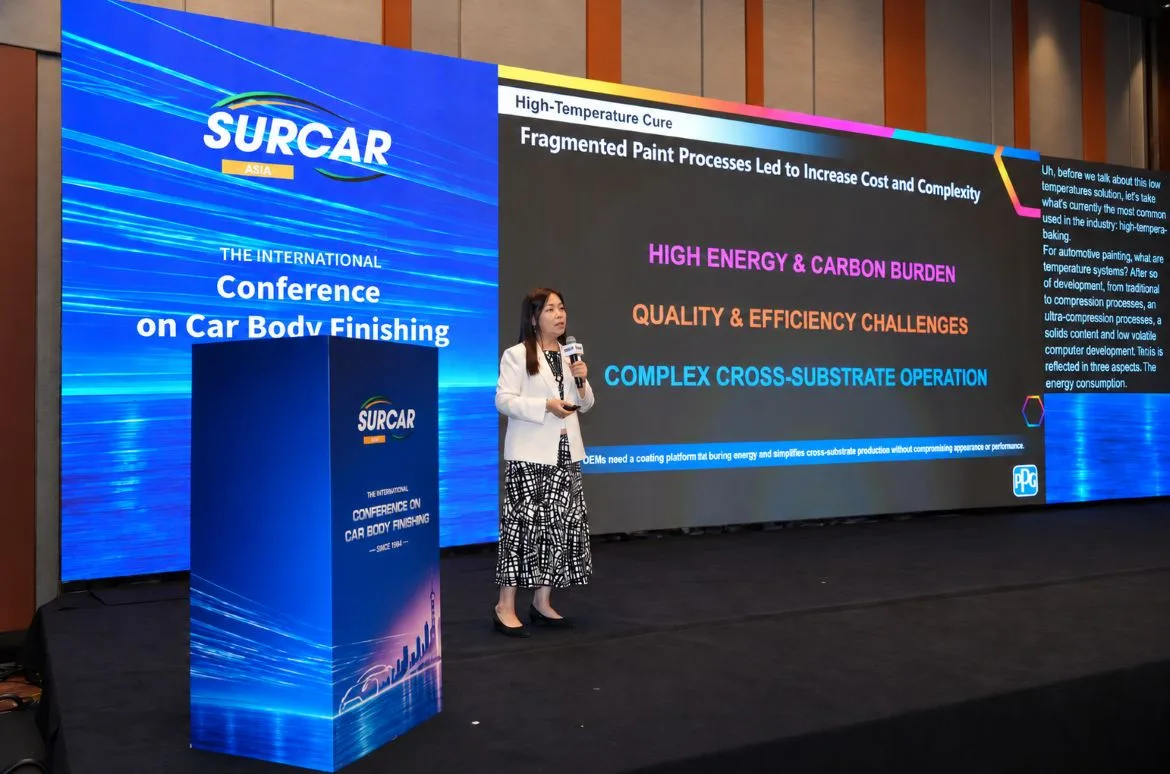
PPG announced Sept. 23 that it showcased a low-temperature automotive coating platform at the SURCAR Asia 2026 conference in Shanghai.
Metal vehicle bodies and plastic components such as bumpers commonly require separate coating processes because the substrates have different heat tolerances and curing requirements. PPG said its technology combines coating-material design with advanced curing mechanisms to broaden the compatible processing window across metal and plastic substrates.
The platform provides two cure routes. A stand-alone basecoat is designed to cure independently at 110 °C, while a three-layer system is designed to cure together at 90 °C. PPG compared those options with conventional higher-temperature automotive processes that may cure at approximately 140 °C.
According to the company, the lower-temperature options could help automakers expand the use of heat-sensitive substrates, maintain more consistent color across metal and plastic components and introduce integrated processing in phases based on individual production-line requirements.
PPG plans production-line trials with automakers worldwide to evaluate the technology across different coating processes, plant conditions and vehicle platforms. The company did not disclose a commercial-launch date.
Lower-temperature automotive coating technologies matter to formulators and OEM finishers because resin design, crosslinking and substrate compatibility determine whether metal and plastic components can move through more integrated paint processes. Explore PCI’s Automotive Coatings coverage.
Looking for a reprint of this article?
From high-res PDFs to custom plaques, order your copy today!