Wet vs. Dry Electrode Coating: Evaluating Process Tradeoffs in Lithium-Ion Battery Manufacturing
Inside this Article
- Wet coating remains the process of record for lithium-ion battery electrodes due to its maturity, scalability and established material systems.
- Slot-die coating continues to enable uniform, high-precision electrode layers through controlled flow, closed systems and adaptable die design.
- Simultaneous two-sided coating is emerging as a key improvement, reducing dryer length, energy use and operational complexity.
- Dry coating offers clear advantages in footprint, energy consumption and cost, but still faces scale-up challenges tied to materials, mixing and equipment wear.
- Manufacturers must evaluate readiness based on material compatibility, performance requirements and timeline, rather than assuming a near-term full transition.
Battery manufacturers evaluating electrode production today are not choosing between a legacy process and a clear replacement. Instead, they are weighing two fundamentally different approaches, each with distinct advantages, limitations and timelines for maturity.
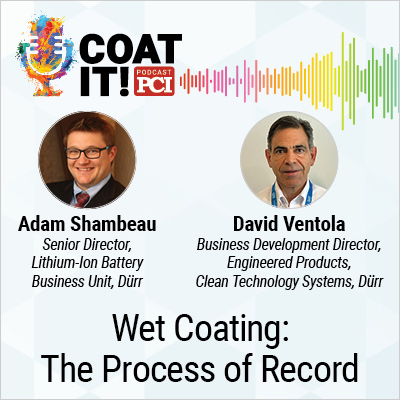
In a recent two-part episode of PCI’s Coat It! podcast, Adam Shambeau, senior director of the Lithium-Ion Battery Business for the Americas at Dürr, and David Ventola, Lithium-Ion Battery sales director for the Americas, outlined how wet and dry coating processes are being assessed across cost, scalability, quality and sustainability.
Wet Coating Remains the Industry Baseline
Despite increased attention on alternatives, wet coating continues to underpin the majority of lithium-ion battery production programs.
That position is rooted in decades of process development and industrial familiarity. As David Ventola explains, “it’s a process that’s well-known and well-developed.”
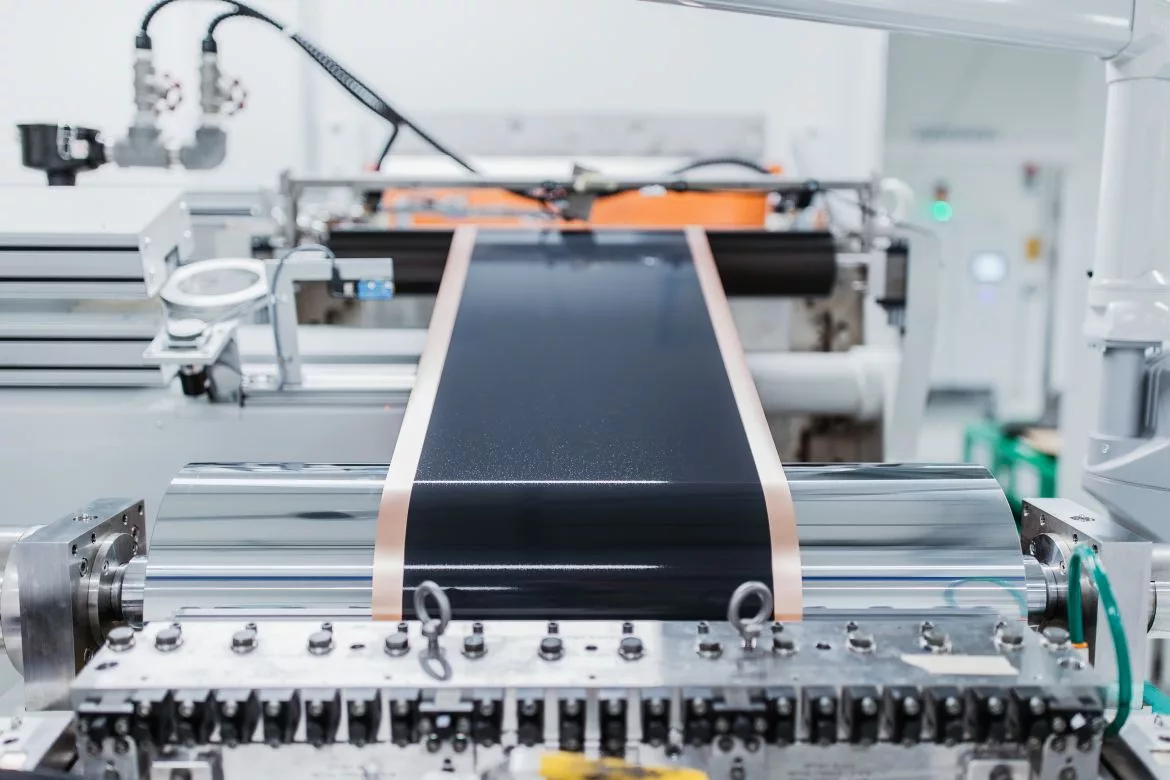
The strength of wet coating lies in its ability to deliver consistent, high-volume output using established materials and equipment. Slot-die coating, in particular, remains central to that capability.
“Slot dye coating has been practiced in many industries for decades… it’s a closed system, it’s a pre-metered flow, and the die internals can be designed for the rheology of almost any fluid,” Ventola notes.
This combination of controlled flow and adaptable design enables uniformity at production scale, which continues to be a primary requirement for electrode manufacturing.
 Credit: _Aine_ / iStock via Getty Images Plus; olaser / DigitalVision Vectors via Getty Images Plus; Ukususha / iStock via Getty Images Plus;
Process Complexity Still Drives Innovation
While mature, wet coating is not without operational challenges. The traditional “coat-dry, coat-dry” sequence introduces multiple points of variability that manufacturers must manage carefully.
Adam Shambeau highlights one of the most significant issues: “the slurry is coming from two different batches with two different entry points… it’s very important that there’s consistency throughout it.”
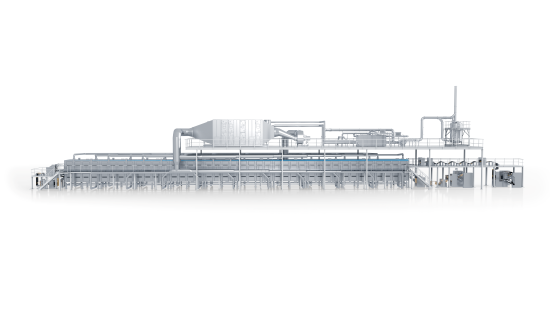 The tandem process is characterized by a slot-die coating on a backing roll, whereby one side of the electrode foil after the other is first coating and then dried. Image source: Dürr.
In addition to batch variability, the process itself can introduce unintended effects. “The A-side coat is dried twice,” he explains, which can influence final performance depending on the system design.
Mechanical effects also emerge as coatings become thicker. Ventola notes that curl becomes increasingly problematic under those conditions, with severity tied directly to coating thickness.
These challenges do not displace wet coating, but they do create opportunities for process refinement.
Simultaneous Two-Sided Coating Redefines Efficiency
One of the more notable advancements within wet coating is the shift toward simultaneous two-sided coating. Rather than repeating sequential coating and drying steps, both sides of the electrode are processed within a single pass.
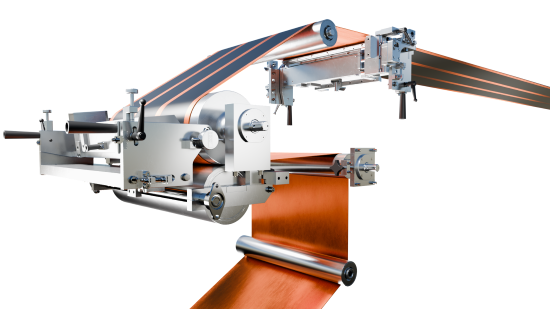 The simultaneous two-sided process consists of a slot-die coating to coat and dry both sides of the electrode foil in one pass. Image source: Dürr.
This approach simplifies both equipment design and plant operations. From an equipment perspective, reducing dryer length has a direct impact on capital investment. From an operational standpoint, fewer process steps translate into lower labor and energy requirements.
Shambeau explains that manufacturers can “reduce your dryer length effectively by half” while also lowering operator requirements and energy consumption.
Ventola summarizes the impact succinctly as “lower CAPEX, lower OPEX.”
Beyond cost, the approach also addresses quality concerns. Each side of the electrode is dried once under consistent conditions, which helps eliminate curl and improves uniformity across the foil.
Episode 1 walks through how simultaneous two-sided coating operates in practice and where it delivers the most value.
Sustainability Pressures Are Reshaping Wet Processes
Sustainability considerations are increasingly influencing electrode manufacturing decisions, particularly around solvent use.
“There is a lot of pressure to take NMP out of the equation,” Ventola explains.
However, the transition away from NMP is constrained by material dependencies, especially the continued reliance on PVDF binders in cathode formulations. As a result, most manufacturers are taking incremental steps rather than making immediate process changes.
One practical approach is solvent recovery and reuse. Ventola notes that on-site recycling reduces both operational cost and logistical burden, while also lowering environmental impact.
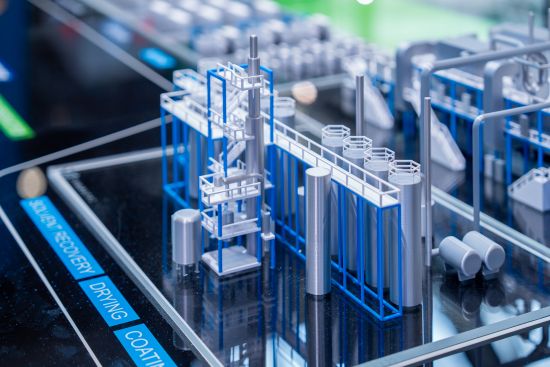 3D model of a solvent recovery and treatment system. Image source: Dürr.
Longer-term shifts toward alternative solvents or water-based systems remain under development, particularly on the cathode side where material compatibility is more complex.
Dry Coating Gains Attention, but Not Without Tradeoffs
While wet coating continues to dominate production, dry coating has gained momentum as manufacturers look for ways to reduce cost, energy use and facility footprint.
Interest accelerated around 2020, following increased visibility of dry electrode concepts within the broader battery industry. As Ventola notes, “everybody has jumped on that bandwagon.”
The potential advantages are significant. Eliminating liquid solvents simplifies mixing and reduces energy demand, while removing large drying systems enables more compact production layouts.
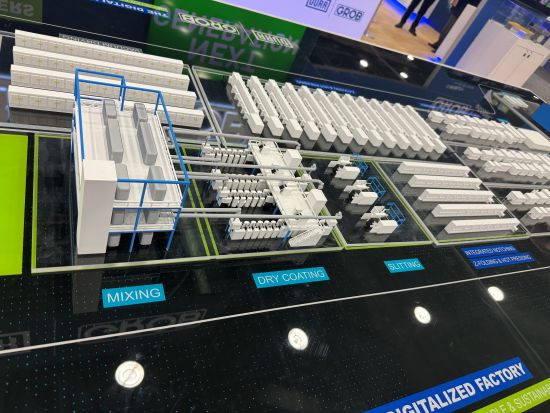 Image Credit: Courtney Bassett
PCI editors had the opportunity to stop by Dürr’s booth at The Battery Show North America 2025 in Detroit to learn more about the company’s newest battery manufacturing technologies. The innovations on display underscored how coating and finishing expertise is taking on a larger role across the battery value chain with process improvements that target energy use, scrap reduction and high-throughput cell assembly for next-generation production. Read that story here.
“You’ve eliminated the NMP and the water… much less energy is required,” Ventola explains.
He also points out that overall facility footprint can be reduced by as much as half, creating meaningful savings in both capital and operating costs.
A Different Manufacturing Philosophy
To illustrate the shift, Shambeau offers an analogy that captures the change in approach.
“Think about making pizza dough,” he says, describing how traditional processes scale through known equipment and methods.
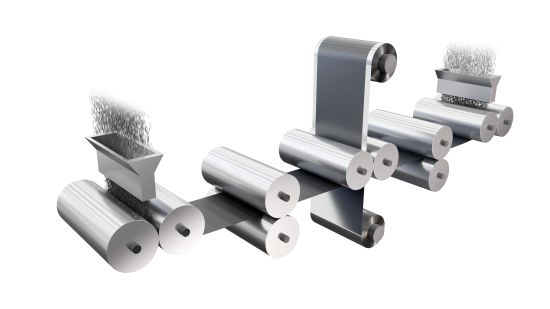 Image: Dürr
Dry coating removes key steps from that equation. Fewer inputs, fewer process stages and a smaller production footprint create the potential for lower overall cost.
“The investment for the equipment is less. The footprint is less… the cost to produce a battery is less,” he explains.
The full analogy provides useful context for how dry coating differs at a process level. Episode 2 expands on this comparison.
 Credit: _Aine_ / iStock via Getty Images Plus; olaser / DigitalVision Vectors via Getty Images Plus; Ukususha / iStock via Getty Images Plus
Scale-Up Remains the Primary Barrier
Despite its advantages, dry coating is still in the development phase for large-scale battery production.
“This is a completely new manufacturing method,” Ventola notes.
That shift introduces challenges across materials, processing and equipment. Changing binder systems is often required, and maintaining key performance metrics such as energy density and adhesion remains critical.
Process scalability is another major consideration. Shambeau points to mixing as a key constraint, emphasizing the need for consistent material distribution across wider electrode formats.
Equipment durability also becomes a factor. “The freestanding film itself is abrasive… your calendar rolls do begin to wear quickly,” he explains, highlighting an additional operating cost consideration.
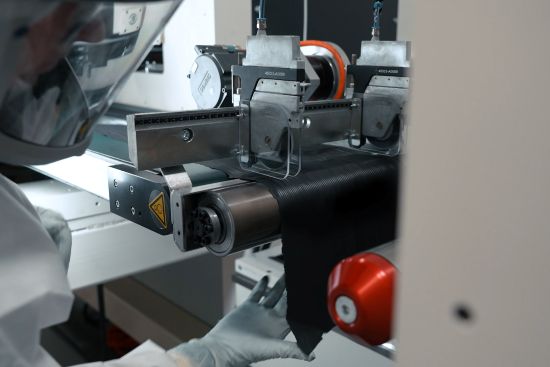 Image: Dürr
These challenges do not eliminate the potential of dry coating, but they do define the timeline for broader adoption.
Multiple Approaches Continue to Emerge
Dry coating is not a single, standardized process. The most widely pursued method involves creating freestanding films that are later laminated to the foil. Alternative approaches, such as dry powder spraying followed by bonding, are also being explored.
Ventola notes that the freestanding film approach currently captures the majority of industry focus, reflecting where development efforts are most concentrated.
Progress in this space is also being driven through collaboration between equipment providers and process technology developers, underscoring the complexity of bringing new manufacturing methods to scale.
A Dual-Path Future for Electrode Manufacturing
Wet coating will continue to serve as the foundation for high-volume production, particularly as incremental improvements enhance efficiency and sustainability. Dry coating, meanwhile, represents a longer-term opportunity to rethink manufacturing economics and plant design.
As Ventola explains, the goal is to “meet the customer where they are,” supporting both approaches as manufacturers evaluate their specific needs and timelines.
For most companies, the decision is not whether to switch, but when and under what conditions.
For more on process selection, equipment considerations and emerging technologies in electrode production, explore PCI’s coverage of Industrial Coatings and related manufacturing innovations.
Looking for a reprint of this article?
From high-res PDFs to custom plaques, order your copy today!