Scientists at the School of Packaging at Michigan State University have developed a novel approach for creating commercially feasible hybrid coating technology capable of self-healing along with omniophobic features.
It is up to the creative minds of the industry to make use of polysulfide polymer self-healing properties to create uncontested market environments for polysulfide-based sealants, adhesives and coatings, and priceless added value to their customers.
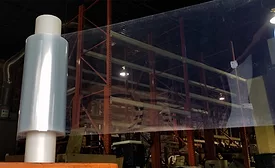
NEI Corp., Somerset, New Jersey, announced that it has successfully demonstrated application of its NANOMYTE® MEND 1000 self-healing coating technology on PET film.
In this article, we discuss the design of self-healing functionality into silicone-based protective materials to improve their ability to maintain adhesion after damage.
This article reports on our evaluation of AMPARMOR™ 2000, an additive designed to impart self-healing functionality to fusion-bonded epoxy (FBE) and epoxy powder primer coatings, and AMPARMOR 3000, designed as an option for nonepoxy coatings.
NEI Corp. announced that the U.S. Patent and Trademark Office has issued patents to the company on self-healing, superhydrophobic and abrasion-resistant coatings.
Industry analyst firm n-tech Research has released a new report titled Markets for Self-Healing Materials: 2015-2022. According to the report, self-healing materials (reversible polymers, inorganic capsule and vascular systems, biomaterials, relevant shape memory materials and other self-healing coatings) will grow to around $2.7 billion by 2020.
NANOMYTE® TC?5001, a nanotechnology-enabled, single-component, clear coating from NEI Corp., is designed to protect zinc?plated and galvanized steel surfaces from rusting under severe environmental and operating conditions.