A significant development in the coatings industry is not the latest resin, solvent or additive, it's the way these ingredients can now be bought and sold.
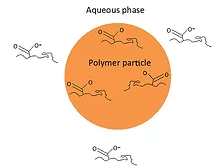
Sustainable low-Mw and high-Mw polymers can be made without generating any waste during polymer synthesis, using reactive solvents and water as a reaction media.
These epoxy curing agents can achieve zero-VOC floor coatings, excellent adhesion to poorly prepared concrete, good water resistance and fast return-to-service.
This innovative technology is designed to meet the delicate balance of the low-bake conditions for coating MDF. It is based on unconventional polyester-hybrid technology with a complete binder package approach that offers synergistic performance benefits of flow, smoothness, excellent chemical and stain resistance, adhesion on MDF and metal, ease of workability, and one-shot matte capabilities at low temperatures.
This article addresses some of the key challenges associated with formulating resins at high solids levels and outlines the potential for Michael addition chemistry to raise coatings solids levels to new heights.
This innovative new series of poly-Mannich epoxy curing agents is formulated to offer a reduced hazard rating and variable reactivity inclusive of slow, medium and outstanding speed of cure.
This article discusses a unique, biobased solution designed for thermoplastic road marking formulations. The new technology improves two critical performance characteristics in a rosin ester - initial light color and oxidative stability.
There are important advantages related to the latex properties that can be achieved with a semi-batch process, and more specifically a starve-fed process, which is simply a semi-batch process where the monomer concentration inside the polymer particles is kept very low by keeping the monomer feed rate to the reactor low.

 RSS
RSS