Recorded live at the 2026 CTT Summit, IPG Photonics' Chance Willis explains how laser cleaning and curing could shorten powder coating production times, reduce equipment footprints and create new opportunities for coating formulators.
Recorded live at the 2026 CTT Summit, Ink Invent CEO Paul Mijnen explains how Crystal Glass Pigments and new color measurement technology could improve the visibility of vehicles to human eyes and automotive sensors.
Recent forecasts point to sustained coating-additives demand as sustainability, industrial investment and performance requirements shape purchasing and product development.
Grand View Research projects 6.5% annual growth for coating additives, with sustainability, infrastructure investment and higher performance expectations helping shape the market outlook.
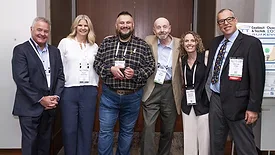
The technical program, volunteer leadership, student poster session and in-person conversations all reinforced why CTT Summit matters to the coatings community.
Courtney Bassett reflects on her first CTT Summit as PCI’s chief editor, from abstract selection and moderator support to student research, panel planning and industry conversations.
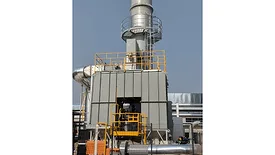
An emissions-control specialist explains how capture design, oxidizer selection, heat recovery and future capacity shape VOC-control decisions for coating operations.
The first PCI News Now brings together coatings research, manufacturing investment, supplier changes and an industry recognition in a quick video update.
Watch the first PCI News Now for updates on a self-repairing waterborne coating, Evonik’s planned German site closures, Ford’s $1 billion Kentucky paint shop and PCI’s 2026 Lifetime Achievement Award.
Polyamide wax additives form reversible three-dimensional networks that help waterborne coatings balance pigment suspension, sag resistance, application flow and structural recovery after shear.
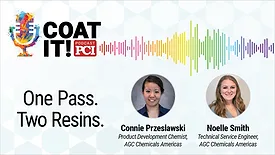
A FEVE-polyester powder topcoat showed differences in flexibility and gloss retention. Hear the researchers explain the results and the processing decisions behind them.
Four thermolatent catalysts are evaluated for pot life, dust-free time and hardness in two-component polyurethane coatings under ambient and elevated-temperature cure conditions.
PPG researchers explore how thermolatent tin catalyst design changes the balance between working time and low-temperature cure in polyurethane coatings.
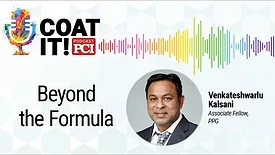
A PPG scientist traces his path from molecular research to customer problems, including corrosion protection, application efficiency and the teams behind innovation.