Nanotechnology is an emerging field that is enabling breakthroughs of new and effective tools in the coatings industry. The trends and developments mentioned in this article are a few hot bets expected to impact the coatings industry in the coming years.
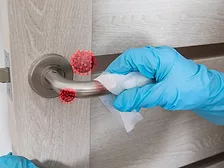
Research has shown that a thin cellulose film can inactivate the SARS-CoV-2 virus within minutes, inhibit the growth of bacteria including E.coli, and mitigate contact transfer of pathogens. The coating is invisible to the naked eye, and is abrasion resistant under dry conditions, making it suitable for use on high-traffic objects such as door handles and handrails.
Nanomaterials can provide paints and coatings with unique characteristics — like antimicrobial, anticorrosive and dust-repellent properties — that can offer benefits to a wide range of industries.
Independent of industry, the protective nanocoatings marketplace growth potential is considerable, as protecting electronics becomes increasingly challenging as devices shrink.
NanoRustX (NRX) NanoPrime works by chemically reacting with iron and iron oxide (rust) to form iron phosphate and creates a nano bond with both metallic and painted surfaces. The chemically bonded layer is insoluble and extremely corrosion resistant.
Graphite Innovation and Technologies Inc. has developed an environmentally friendly, hard foul-release coating that can be easily cleaned and does not require the application of primer underlayers.
Because of the performance capabilities of the new water-based acrylic polymer primers and their applicability to nearly all substrates, paint manufacturers have an opportunity to consolidate their primer inventory and provide their customers with a solution for the most challenging corrosive environments.
Successful incorporation of nanomaterials into optical display coatings relies on the core expertise of engineering finely tuned nanoparticles, dispersal in a variety of solvents and scaling these processes to commercial volumes.
 RSS
RSS