This article discusses new developments in water-based UV-curable polyurethanes that offer much-improved 50 °C paint stability in clear, as well as pigmented coatings. It also discusses how these resins address the desired attributes of the coating applicator in increasing line speed through fast water release, improved block resistance, and solvent resistance off the line.
Covestro has introduced a waterborne and waterborne-UV family of high-performing resins for industrial coating applications such as wood furniture, cabinetry, and building products.
Bio-surfactants are a promising alternative to chemical surfactants in the development of eco-friendly and high-performance coatings due to their bio-degradability, low toxicity, renewable feedstocks, and enhanced performance in various aspects of coatings formulations.
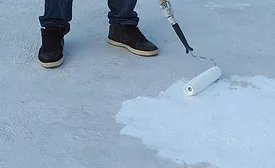
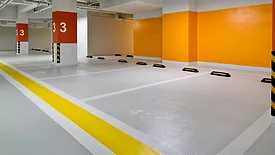
This study comprehensively evaluated novel, ultra-low-VOC 1K and 2K waterborne floor-coating systems designed to provide eco-friendly, lower-VOC alternatives to traditional solvent-based coatings. The materials employed in these innovative systems showed remarkable performance when subjected to industry-standard tests.
The new technology is a waterborne wood coating that can be applied across a wide spectrum of environmental conditions, without the productivity-sapping performance trade-offs commonly associated with waterborne coatings.
This month’s Formulating with Mike column continues the discussion on resins, with a focus on epoxy curing agents. When it comes to great adhesion, chemical resistance, and corrosion resistance, an epoxy is hard to beat. There are different epoxy curing agents, and each one provides different properties that can be suited for a wide variety of end-use applications.
This month’s Formulating with Mike columncontinues the focus on resins. Mike tests paints with APE-containing and APE-free emulsions for stability, particle size, and final paint quality.
This month’s Formulating with Mike columncontinues the focus on resins, and discusses acrylic emulsion polymerization, in particular, surfactant design and how it affects the polymerization of a vinyl-acrylic emulsion.
Waterborne latexes are produced via emulsion polymerization, in which surfactants or emulsifiers are the key components to control latex properties. Much effort has been made to reduce the impact of surfactants on the performance of waterborne formulations. One of the promising approaches is to use polymerizable or reactive surfactants to prepare latex polymers.