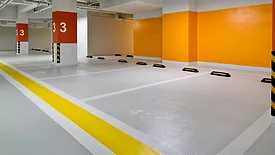
This article offers formulation strategies to enhance durability, minimize moisture issues and maintain self-leveling properties in MDI-based urethane coatings.
Sustainable coatings are reshaping the industry with bio-based, powder and energy-efficient solutions that reduce environmental impact while enhancing performance.
A DIY garage floor coating system uses a waterborne resin to achieve low VOCs, lasting durability, and high performance for industrial and consumer applications.
Concrete coatings utilize advanced resin systems like 1K acrylics and 2K epoxies, designed for optimal performance and durability in various applications.
The UV-curable coatings market is poised for growth, driven by sustainability trends, UV LED curing innovations, and applications in automotive and electronics, among other drivers.
PCI’s “Did You Know” column has published a wealth of information about redox chemistries for use in emulsion polymerizations. This edition, the final in a series, focuses on its use in aqueous-based polymer dispersions.
Concrete coatings require specific properties and testing methods to ensure durability and performance across various applications and environmental conditions.
The market for low-VOC coatings is projected to grow from $128.6 billion in 2024 to $154.9 billion by 2029, at a compound annual growth rate of 3.8% during the forecast period.