Synthomer has developed a novel styrene acrylic binder with excellent water resistance, scrub resistance and hiding power, and that potentially enables the paint and coatings industry to optimize binder and pigment dosage, resulting in paint property, carbon footprint and cost improvements.
The average molecular weight of a latex can be influenced by a number of factors, but it is often not realized that the number of particles in the latex (which is directly related to particle size) is important in determining molecular weight.
In the development of a low- VOC, self-healing epoxy hybrid primer, this company leveraged its self-healing technology to design a waterborne protective primer with an unprecedented combination of corrosion resistance and eco-friendliness.
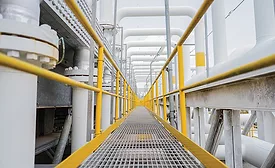
NanoRustX (NRX) NanoPrime works by chemically reacting with iron and iron oxide (rust) to form iron phosphate and creates a nano bond with both metallic and painted surfaces. The chemically bonded layer is insoluble and extremely corrosion resistant.
Developments in chemically resistant, 2K polymer-modified epoxy coatings have met several market needs, including carry of sulfuric acid, coating inspection facilitation, anti-static coatings, improved abrasion resistance and field-repairable coatings.
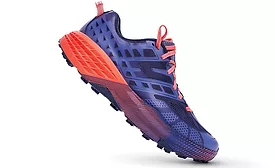
Photosensitive haptic coatings can not only achieve gradual color change on athletic footwear, but could also be used for point-of-purchase individualization.
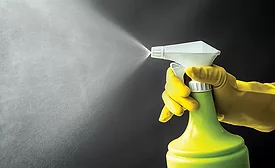
The COVID-19 pandemic has escalated the aggressiveness and frequency of cleaning in higher-risk healthcare environments. This, coupled with existing guidelines, has created a need for more durable and chemical-resistant solutions in the healthcare built environment.
Over the past couple of decades, there has been a lot of discussion, R&D, marketing and sales efforts aimed at converting as many products that are based upon fossil fuel-derived specialty chemicals to “green” (biosourced) analogs, as possible.
Silanes have been shown to improve film properties of resin systems when they are reacted into the resin or incorporated into a resin solution as additives. The improved properties result from their unique functionality, which allows for inter-polymer crosslinking and chemical bond¬ing to many substrates.

 RSS
RSS